Aller au contenu
Logo de la Maison Paternelle de Sainte BernadetteMaison Paternellede Sainte Bernadette

What Are the Major Events in Lourdes?

The annual calendar of feasts, pilgrimages and celebrations

Lourdes, a town that lives to the rhythm of its great feasts

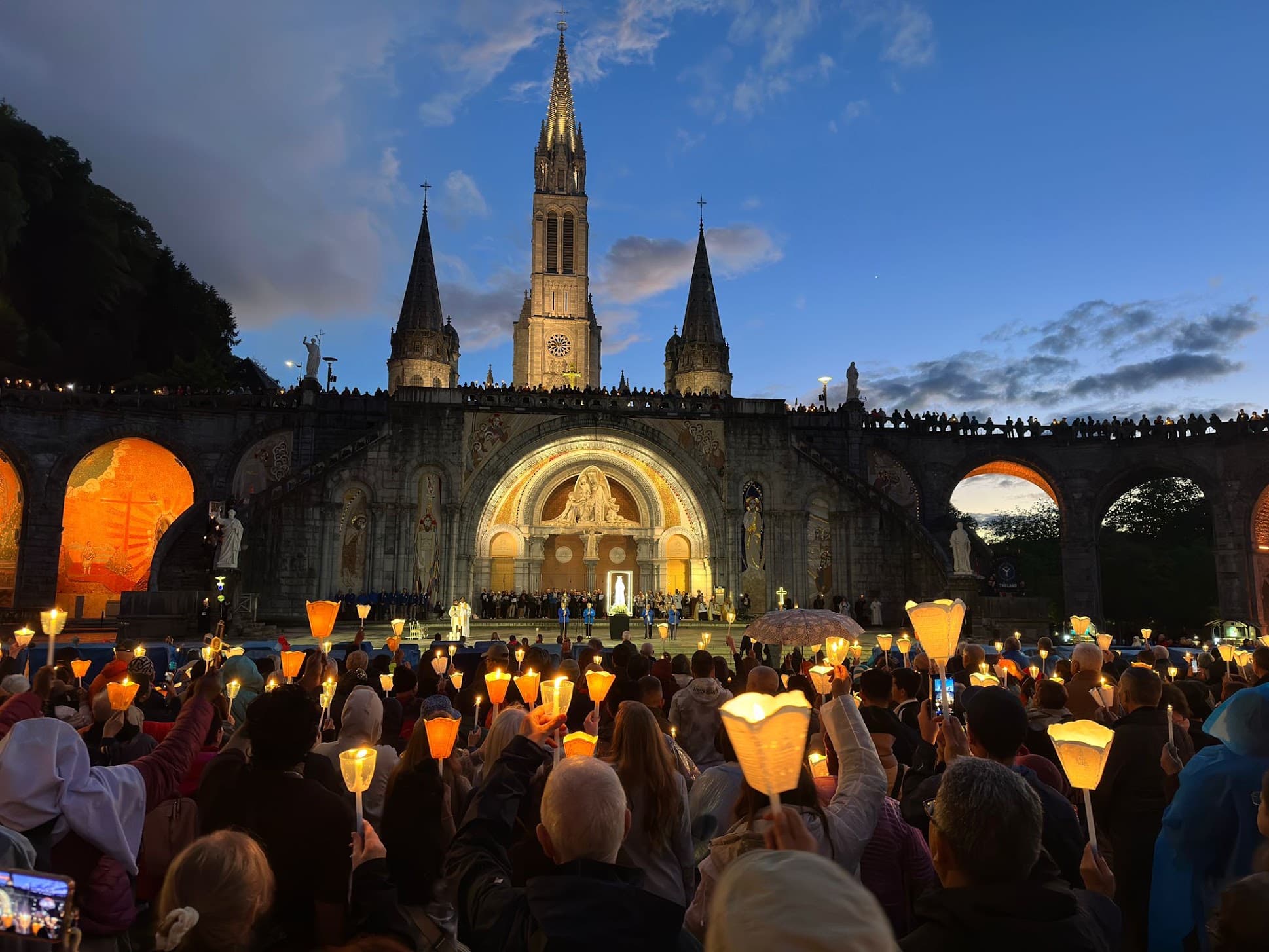
The evening torchlight procession at the Sanctuary of Lourdes

Since 1858, Lourdes has lived to the rhythm of the Catholic liturgical calendar. Each month brings its celebration, each season its pilgrimages, each date its own particular atmosphere. Some feasts draw tens of thousands of pilgrims in just a few days. Others, more discreet, unfold in the silence of an almost empty Sanctuary.

Knowing this calendar means choosing the face you want your stay to have. You can come and experience the excitement of the great international gatherings. Or, on the contrary, seek the peace of the town in winter, when only a handful of pilgrims pray before the grotto. Our family, direct descendants of the Soubirous, has watched this rhythm for a hundred and fifty years. Here are the key dates to know in order to prepare your visit as well as possible.

11 February: Our Lady of Lourdes and the anniversary of the first apparition

On 11 February 1858, around noon, Bernadette Soubirous sees the Virgin Mary for the first time in the niche above the grotto of Massabielle. She is fourteen years old. She has gone out to gather firewood with her sister Toinette and her friend Jeanne Abadie. She hears a sound like a gust of wind. She turns around. She sees the Lady.

This date has become the liturgical feast of Our Lady of Lourdes, celebrated throughout the Catholic Church. In Lourdes, 11 February is one of the high points of the year. A solemn Mass is celebrated at the grotto, processions move across the esplanades, and the faithful come from all over the world to commemorate that first meeting granted to a poor child of the Pyrenees.

Since 1992, 11 February has also coincided with the World Day of the Sick, instituted by Pope John Paul II. Lourdes is its symbolic centre. On that day, hospitallers, caregivers and the sick themselves receive very special attention.

Attendance is high despite the winter. If you want to experience this date in Lourdes, book your accommodation several months in advance. The Paternal Home, usually open from April to October, opens exceptionally on 11 February to welcome pilgrims who come to commemorate the first apparition. The grotto and the Sanctuary, for their part, remain open all year round.

Lent, Holy Week and Easter

Lent prepares for the great feast of Easter. In Lourdes, this more inward-looking season is lived in the recovered silence of the grotto. The daily celebrations take on a penitential tone, echoing the Virgin's words to Bernadette on 24 February 1858: “Penance! Penance! Penance! Pray to God for the conversion of sinners.”

The monumental Way of the Cross on the hill behind the basilicas takes on its full power during this season. Its fifteen life-size bronze stations, climbed in the cool of spring, form one of the most beautiful meditations on the Passion in France.

Holy Week gathers the faithful around the great traditional liturgies: the Chrism Mass, the Mass in memory of the Last Supper on Holy Thursday, the celebration of the Passion on Good Friday, the Easter Vigil in the night from Saturday to Sunday, and the solemn Mass of the Resurrection on Easter Sunday.

Easter Monday traditionally marks the return of the great evening processions. The torchlight procession sets out once again every evening at 21:00, until the end of October.

May: the month of Mary

In the Catholic tradition, the month of May is dedicated to the Virgin Mary. In Lourdes, this month naturally takes on a particular intensity. The rosary is recited at the grotto every day, flowers are laid, and the atmosphere of the great pilgrimages returns.

May is when the International Military Pilgrimage (PMI) takes place, one of the oldest and most moving pilgrimages of the year. Begun in the aftermath of the Second World War, it brings together soldiers from several dozen nations, who come to Lourdes every year to pray together in a spirit of fraternity and peace. It is an event unlike any other: seeing soldiers from all over the world walking together towards the grotto is striking, whether you are a believer or not.

May is generally milder than the months that follow: gentle temperatures, dazzling Pyrenean landscapes, lengthening days. It is one of the best times to discover Lourdes in good conditions.

The Ascension weekend: a great spring holiday

Forty days after Easter, the Ascension celebrates the risen Christ's return to the Father. Always falling on a Thursday, it opens a long public-holiday weekend in France that becomes one of the great moments of the year in Lourdes. Depending on the calendar, the feast falls in May or at the very beginning of June, sometimes still within the month of Mary.

The Ascension weekend marks the first surge in intensity before the summer. Diocesan pilgrimages follow one another, accommodation fills up, and the evening torchlight procession returns to its full scale. Tens of thousands of pilgrims converge on Lourdes during these four days, drawn by the liturgical feast but also by the convenience of the long weekend.

At the Paternal Home, this is one of the first highlights of the season. Our family welcomes a continuous flow of visitors, often coming in diocesan groups or as families. If you plan to come at this time, book your accommodation several months in advance and reserve your visiting slot at the Moulin Lacadé ahead of time to avoid waiting.

If, on the other hand, you are looking for a quieter moment, choose the weeks immediately before or after the long weekend. Attendance drops off noticeably then.

Pentecost and early summer

Pentecost, which falls fifty days after Easter, opens the great liturgical season in Lourdes. It is one of the largest gatherings of the year, second only to 15 August: tens of thousands of pilgrims converge on the town over this long public-holiday weekend. Several diocesan and national pilgrimages choose this date to gather their faithful, making it one of the high points of the Lourdes calendar.

At the Paternal Home, it is one of the busiest weekends of the season. If you plan to come, book your accommodation several months in advance and plan your visit to the Moulin Lacadé ahead of time.

The feast of the Trinity and that of the Blessed Sacrament (Corpus Christi) follow in the weeks that come. They give rise to major processions in the Sanctuary.

As summer approaches, Lourdes gradually builds in intensity. Diocesan pilgrimages follow one another. The evening processions grow longer. The town settles into its summer rhythm.

The Saint John's weekend: a great summer weekend

Around 24 June, the feast of Saint John, Lourdes lives one of its great summer weekends. This is something we, the Soubirous family, have observed for a long time: the town rises in intensity then, in the wake of the Ascension and Pentecost, which have already opened the high season. The Sanctuary, the streets and the accommodation are all full. The Paternal Home, in particular, welcomes a continuous flow of pilgrims from all over the world.

If you are planning a visit at this time, book everything well in advance: hotel, restaurants, and your visiting slot at the Paternal Home. And plan your journeys carefully: traffic and parking are under strain.

If, on the other hand, you are looking for a quieter moment to experience Lourdes, this is not the weekend for it. Choose the weeks immediately afterwards, or the months of September and November.

15 August: the solemnity of the Assumption

The feast of the Assumption, on 15 August, celebrates the Virgin Mary's being taken up into heaven. It is one of the greatest Marian feasts in the Catholic calendar. In Lourdes, it gives rise to the national Assumption pilgrimage, organised since 1873 by the congregation of the Augustinians of the Assumption.

The crowds are immense. Tens of thousands of pilgrims gather in the town for the week surrounding 15 August. Liturgies follow one another day and night. The evening Marian procession takes on exceptional scale. It is the principal feast of the year in Lourdes, but it is also the most crowded time, sometimes the most difficult for those seeking quiet reflection.

If the Assumption in Lourdes appeals to you, know that you will experience something rare there: the universal Church made visible. If you are wary of the crowds, move your visit to late August or early September, when the pilgrimages calm down.

First Sunday of October: the Rosary Pilgrimage

The first weekend of October is devoted to the Rosary Pilgrimage, organised every year by the Dominicans since 1908. It is one of the largest pilgrimages of the year. It gathers tens of thousands of the faithful around the prayer of the rosary, which has been a distinctive sign of Lourdes ever since the Virgin showed hers to Bernadette at the very first apparition.

October offers a special atmosphere. Temperatures grow cooler, autumn colours settle over the Pyrenees, and the fervour of the pilgrims takes on a more contemplative tone than at the height of summer. For many, it is one of the most beautiful times to experience Lourdes.

Other major pilgrimages follow one another in September and October: the pilgrimage of the fraternities, diocesan pilgrimages. The end of the tourist season gives way to a more sober, more deeply rooted devotion.

All Saints and early November

1 November, All Saints' Day, and 2 November, the commemoration of the faithful departed, give rise to celebrations in the Sanctuary. The underground basilica hosts the solemn Masses. The grotto keeps all its power, in the deepening chill of autumn.

This is also the time when the Paternal Home closes its season. Our family museum is open from April to October, with an exceptional opening on 11 February for the anniversary of the apparitions.

8 December: the solemnity of the Immaculate Conception

8 December celebrates the Immaculate Conception, the patronal feast of Lourdes. This solemnity commemorates the belief that the Virgin Mary was conceived without original sin.

The dogma of the Immaculate Conception was proclaimed by Pope Pius IX on 8 December 1854, four years before Bernadette's apparitions. Yet at the sixteenth apparition, on 25 March 1858, when Bernadette asked for the fourth time to know the Lady's name, she replied in the Bigourdan dialect: “Que soy era Immaculada Councepciou” (“I am the Immaculate Conception”).

Bernadette, who could not read or write, does not understand the meaning of this learned theological expression. She runs to Father Peyramale's house, repeating the words in her head so as not to forget them. The parish priest turns pale. How could this child know a dogma proclaimed four years earlier in Rome, in a language she does not understand? This coincidence is one of the theological foundations on which the Church recognised the authenticity of the apparitions.

8 December in Lourdes is therefore a major feast. A torchlight procession is held despite the cold. The celebrations gather the faithful pilgrims in an atmosphere more intimate than that of summer.

Advent and Christmas in Lourdes

Advent prepares for the great feast of Christmas in the recovered silence of winter. It is a quiet season in Lourdes. The town dresses itself in Christmas colours with its nativity scenes, its lights, its decorations in the neighbourhood of the Sanctuary.

Christmas Eve is marked by Midnight Mass, celebrated in the Rosary Basilica. The night is cold, the basilica is illuminated, and the singing fills the space. It is an experience profoundly different from the great summer gatherings.

25 December, Christmas Day, and the feast of the Holy Family, celebrated the following Sunday, give rise to solemn liturgies. For those who wish to live Christmas far from the commercial bustle, Lourdes offers a rare atmosphere: silence, quiet reflection, and the beauty of the Pyrenean winter.

Practical advice for planning your visit around the events

If you want to experience a great international pilgrimage (15 August, Easter, Pentecost, Saint John's, the Rosary), book your accommodation six months in advance, be prepared to be patient at the liturgies and processions, and accept the idea that you will be sharing the town with tens of thousands of other pilgrims.

If you are looking for a quieter stay, favour the months of May and June, the weeks of September, or the period from November to February.

If you are coming for a great Marian feast (11 February, 25 March, 15 August, 8 December), know that the liturgies are particularly beautiful, but that accommodation is more expensive and harder to find. Book early.

Whatever moment you choose, check with the Sanctuary a few weeks before you come. The exact calendar of celebrations, processions and international Masses is updated regularly on the official website of the Sanctuary of Our Lady of Lourdes.

FAQ — Your questions about events in Lourdes

What is the principal feast of Lourdes?

The principal feast of Lourdes is that of Our Lady of Lourdes, celebrated on 11 February, the anniversary of the Virgin Mary's first apparition to Bernadette Soubirous in 1858. This date coincides with the World Day of the Sick, instituted by Pope John Paul II in 1992.

When does the great 15 August pilgrimage take place?

The national Assumption pilgrimage is organised every year around 15 August by the congregation of the Augustinians of the Assumption, and has been since 1873. It generally extends over several days and gathers tens of thousands of pilgrims.

What is the biggest weekend of the year in Lourdes?

The Saint John's weekend, around 24 June, is traditionally one of the great weekends of the year in Lourdes in terms of attendance.

When does the Rosary Pilgrimage take place in Lourdes?

The Rosary Pilgrimage is held every year on the first Sunday of October, organised by the Dominicans since 1908. It is one of the largest annual gatherings in Lourdes, in an atmosphere more contemplative than the great summer feasts.

Why is 8 December an important date in Lourdes?

8 December celebrates the solemnity of the Immaculate Conception, the patronal feast of Lourdes. The date is doubly significant: Pope Pius IX proclaimed the dogma on 8 December 1854, and at the sixteenth apparition to Bernadette on 25 March 1858, the Virgin named herself “I am the Immaculate Conception” in the Bigourdan dialect.

Can you visit Lourdes in winter?

Yes. The Sanctuary of Our Lady of Lourdes is accessible all year round. The grotto of Massabielle and the esplanade remain open, the daily celebrations take place, and the atmosphere is particularly peaceful at this time of year. The Paternal Home, for its part, is open from April to October, with an exceptional opening on 11 February for the anniversary of the apparitions.

What are the best months to visit Lourdes while avoiding the crowds?

May, June and September generally offer the best compromise: pleasant weather, moderate attendance, evening processions still held, and the Paternal Home open. November, January and February are the quietest months but also the coldest, and the Paternal Home is closed then, apart from the exceptional opening on 11 February.

Is there a Christmas market in Lourdes?

Lourdes hosts a Christmas market in its town centre during Advent, with its chalets, its craft products and its Pyrenean specialities. The Christmas season is generally quieter than the summer, with an intimate, contemplative atmosphere around the Rosary Basilica and the nativity scenes set up throughout the town.

To go further

Discover the complete life of Saint Bernadette told by her family.

Immerse yourself in the story of the 18 apparitions of Lourdes, from 11 February to 16 August 1858.

Visit the Paternal Home at the Moulin Lacadé during its annual opening season.

Plan your visit: a one-day itinerary in Lourdes, a two-day itinerary, a three-to-four-day itinerary.

For pilgrims: how to prepare your pilgrimage to Lourdes.

Our invitation

Whenever you come to Lourdes, you will find something there. A feast, a silence, a procession, an encounter. The town reveals itself differently depending on the month, the hour, the light of the day.

When you come to visit the Paternal Home, tell us which date you have chosen. We will be able to tell you what awaits you, what to plan for, and how to make the most of your visit.

Maison Paternelle de Sainte Bernadette · 2 rue Bernadette Soubirous, 65100 Lourdes · Opening hours: 9:30-12:15 / 14:15-18:30 · Upkeep contribution: €2.50

Book your visit

The stop not to miss during your stay

Add Bernadette's family home to your itinerary: a free-flow 15-to-20-minute visit in the heart of Lourdes.

or call us on 05 62 94 22 51

1. Choose your date

July 2026
MTWTFSS

Open 7 days a week, April to October, 9:30-12:15 / 14:15-18:30.

2. Who is visiting?

Adults

€2.50 per person

2

Children under 16

Free

0

Priests & religious

Free

0

Visitors with disabilities

Free

0
Total — 2 visitor(s)€5.00

Secure payment by Stripe. Instant confirmation by email.